

The oven—the heart of your kitchen—is one of the most critical appliances in your home. When it stops holding temperature or flat-out refuses to heat, dinner is ruined and frustration sets in. For homeowners and tenants in Pittsburgh, this is more than an inconvenience; it’s a disruption that demands fast, reliable Oven Repair Pittsburgh service from experienced professionals.
Here at A High Tech Appliance Repair, we know that when your oven breaks, you are searching for answers, whether it’s for a simple fix or a complex appliance repair that requires expert intervention. Before you start pulling out your tools, understanding the precise diagnostics and the safety risks involved is paramount.
This guide will walk you through the most common oven failures in both electric ovens and gas ovens, explain the Troubleshooting process, and, most importantly, demonstrate why calling our qualified technicians is the smartest choice for both safety and savings.
The First Signs of Trouble: Diagnosing Your Oven Failure
A malfunctioning oven typically falls into one of three categories: failure to heat, heating unevenly, or display/control issues. Accurately identifying the symptom helps narrow down the problematic parts and ensures faster, more accurate Oven Repair Pittsburgh without unnecessary replacements or delays.
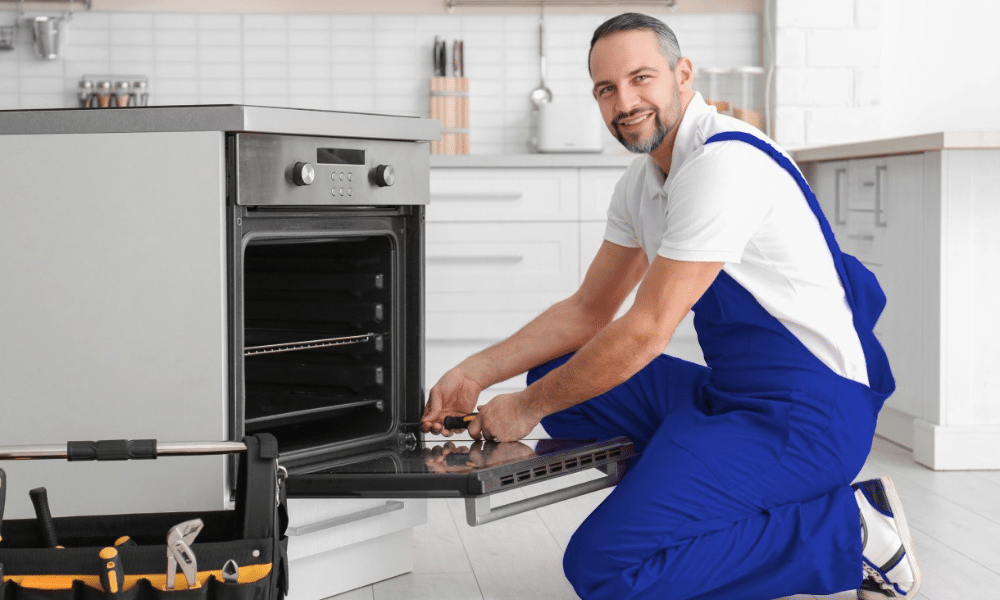
Common Oven Symptoms:
- Oven Won’t Heat At All: The ultimate failure. The control panel may still be lit, but no heat is produced. This often points to the primary heating element (in electric models) or the igniter (in gas ovens).
- Uneven or Incorrect Temperature: The oven is slow to preheat, or baking results are inconsistent. The most likely culprit here is the temperature sensor probe, the thermostat, or a need for calibration. Using an external, manual oven thermometer can confirm the discrepancy between the display and the actual temperature.
- Fails During Self-Cleaning Cycle: The door latch may fail, or the high heat can damage the electronic control board or oven control thermostat.
- Error Code Displayed: Modern devices often show a specific error code (e.g., F1, F3). These codes correspond to very specific component failures, most often the temperature sensor or the control board.
- Unusual Noises or Odors: Clicking (gas igniters), burning smells (electrical short or food debris), or the failure of the cooling fan on a convection model.
Whether you own a standard electric stove, a complex gas stove, or high-end KitchenAid® wall ovens, the next steps involve understanding the underlying system components.
In-Depth Troubleshooting: Electric Ovens
Electric ovens rely on electrical flow to resistive parts to generate heat. When the oven fails, 90% of the time, the issue lies in one of three areas: the heating element, the temperature sensor probe, or the control board.
1. The Heating Element
If your oven stops heating completely, check the visible heating element (top broil or bottom bake). If it looks physically broken, blistered, or has a visible crack, it needs repairing. For homeowners dealing with sudden cooking disruptions, professional Oven Repair Pittsburgh services ensure the issue is diagnosed correctly and fixed safely without risking further damage.
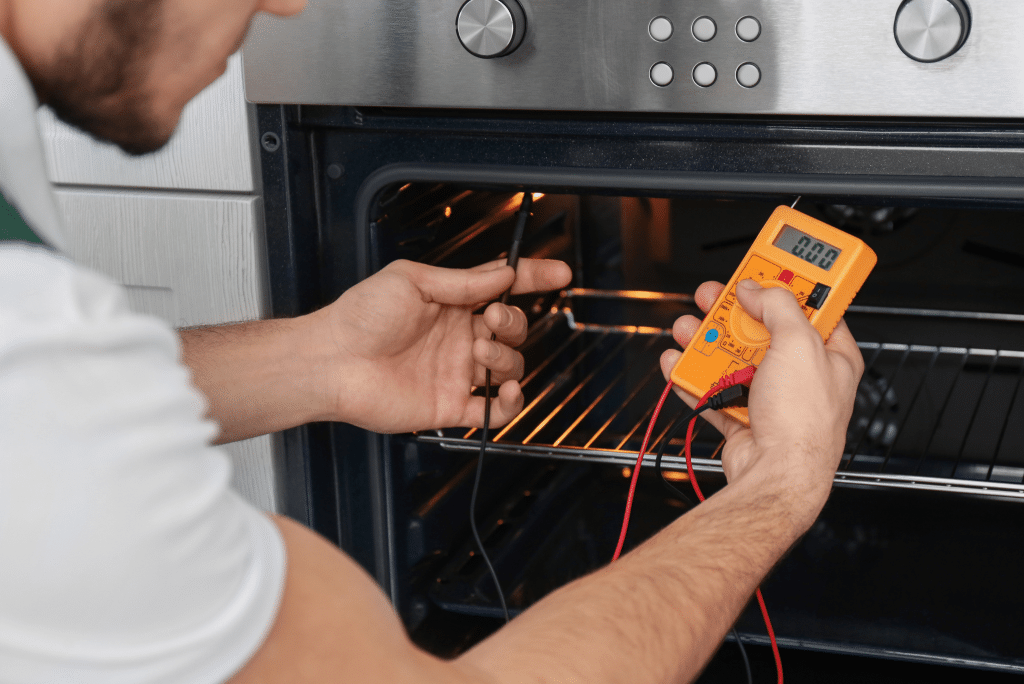
- DIY Testing with an Ohmmeter: For elements that look fine but don’t heat, you can perform an electrical continuity testing if you are comfortable working with electricity (always with the Power Supply disconnected!). Using an ohmmeter, check the resistance across the element’s terminals. A healthy element will show low resistance (around 10 to 50 ohms). An element with infinite resistance is broken and requires replacement parts.
2. The Oven Temperature Sensor
The oven temperature sensor is a small probe, often found on the back wall of the oven cavity. It sends resistance readings to the electronic control board to regulate temperature. If the sensor is faulty, the oven may overheat or underheat dramatically, making professional Oven Repair Pittsburgh essential for restoring safe and accurate cooking performance.
- Testing the Sensor: Disconnect the temperature sensor probe (often via a simple sensor connector). You can test its resistance with an ohmmeter at room temperature. A typical sensor should read around 1080 to 1100 ohms at 70°F (21°C). If the reading is significantly off or shows open circuitry, the sensor is bad and needs to be replaced. Misreading this component is a common reason for poor temperature calibration.
3. The Control Board/Module
The control board (or control module) is the brain of the oven. It processes commands, regulates the thermostat, and reads the temperature sensor. If your display is blank, flashing an error code, or if all other parts test correctly, the failure may be in this complex and expensive component. Due to the high cost of these parts and the complexity of electrical connections, this is rarely a recommended DIY repair, making professional Oven Repair Pittsburgh the safest and most reliable solution.
In-Depth Troubleshooting: Gas Ovens
Gas ovens use an electrical ignition system to light the gas. The most common point of failure is not the gas itself, but the component responsible for lighting it. Warning: Working with a gas line or gas connection presents significant safety risks, including fire and explosion. Always contact a professional for gas-related repairs.
1. The Gas Igniter
The gas igniter (or gas igniter) serves two critical functions: igniting the gas and acting as a flame sensor to keep the gas valves open.
- Symptoms: If the oven won’t light, but you can smell gas, the igniter is likely heating up but not generating enough heat to ignite the gas stream. If you hear the gas hiss but it never lights, or if it lights briefly and then shuts off, the ignition systems are failing.
- Testing: Like electric components, an igniter can be tested for resistance with an ohmmeter. A functioning hot-surface igniter will typically draw between 3.2 and 3.6 amps. A failing one will still draw current but won’t reach the required temperature, causing the control module to close the gas valves as a safety measure. Due to the proximity to the gas line, we strongly advise against DIY testing.
2. Gas Valves and Thermocouples
A broken oven shouldn’t mean a broken budget or weeks of takeout. Whether your issue is a simple temperature sensor failure in your electric ovens or a complex gas igniter problem in your range, A High Tech Appliance Repair provides trusted Oven Repair Pittsburgh services with qualified technicians, genuine parts, and a strong commitment to customer service.
The Value of Professional Appliance Repair: Why DIY Is Costly
Attempting DIY appliance repair on a complex unit like an oven or range can be tempting, but the true cost of an incorrect repair often outweighs the initial savings. For homeowners in Pittsburgh, our professional service offers unparalleled peace of mind.
Safety First: Gas and Electrical Hazards
Gas appliances are inherently dangerous to repair. Mishandling a gas line or gas connection can lead to leaks, fires, or explosions. Similarly, a single mistake with the Power Supply or electrical connections in an electric stove can result in electrocution or damage to the control board that is far more expensive to fix than the original problem. Our local technicians are fully trained to isolate these systems safely.
Accuracy and Efficiency in Repair
- Guaranteed Diagnostics: We use professional-grade advanced diagnostic equipment that goes far beyond a simple ohmmeter. This ensures we correctly identify the problem—whether it’s the temperature sensor, the main control module, or just a small fault in the door sensor or door springs.
- Genuine Parts and Warranty: We source only high-quality OEM parts or approved replacements for all major brands like Whirlpool. Unlike generic online parts from unknown suppliers, our parts are backed by our workmanship warranty, giving you long-term security.
- Time and Convenience: Our streamlined Schedule and appointment system, available via our website and online booking, means less time waiting. We minimize the impact on your busy schedule and get your kitchen functioning again quickly.
A High Tech Appliance Repair: Your Trusted Pittsburgh Partner
When you search for appliance repair near me, you need to find a company that values your time and investment. While we focus on oven repair, we are also experts in fridge repair, washer and dryer service, and all major appliance repair across all brands.
Our Commitment to You:
- Local Pittsburgh Experience: We are not a national chain. We live and work in the Pittsburgh community, offering personalized customer service and rapid response.
- Transparent Pricing and Cost: We believe in upfront pricing. You get clear details on Parts & Labor costs before we begin the repair. We aim for affordability without compromising on quality or using subpar parts.
- Comprehensive Service: Our technicians are certified to handle everything from residential wall ovens (including those with Even-Heat™ True Convection and SatinGlide™ Roll-Out Extension Racks) to light commercial oven repair. We have the experience to deal with complex devices and high-performance range units.
- Secure Online Service: Our website allows you to manage your account and Schedule your appointment securely. Our platform is protected by a robust security solution to prevent online attacks and ensure your personal details remain private.
Conclusion: Get Cooking Again Today
A broken oven shouldn’t mean a broken budget or weeks of takeout. Whether your issue is a simple temperature sensor failure in your electric ovens or a complex gas igniter problem in your range, A High Tech Appliance Repair provides reliable Oven Repair Pittsburgh homeowners can trust, with qualified technicians, Genuine Parts, and a strong commitment to customer service.
Don’t gamble with your family’s safety or waste money on the wrong parts or an incorrect diagnostics.
Schedule your appliance repair today with trusted local experts. Call A High Tech Appliance Repair in Pittsburgh or visit our website to secure your service appointment for reliable, affordable oven repair pittsburgh .We’ll get you back to cooking sooner than you think!