

Discovering your washer filled with dirty water after a wash cycle can be frustrating. When your washing machine won’t drain properly, you’re left with soaking wet clothes, an inefficient spin cycle, and potentially costly repairs if not addressed promptly. This common issue affects all brands of washers, from front-loading washers to top-loading models. The good news is that many drainage issues can be resolved without calling a repair technician. In this comprehensive guide, we’ll explore the causes behind washing machine drainage problems, provide step-by-step solutions you can implement yourself, and explain when it’s time to seek professional help from A High Tech Appliance Repair, your trusted destination for tech repair.
Understanding Why Your Washer Won’t Drain
Common Causes of Drainage Issues
When your washer won’t drain, several culprits might be responsible. Understanding the root cause is essential for finding an effective solution.
Clogged Drain Hose
One of the most common reasons for a washer not draining is a clogged drain hose. Over time, lint, debris, and foreign objects can accumulate and restrict water flow through the washing machine drain hose.
Kinked Drain Hose
Sometimes the issue is as simple as a kinked drain hose. The plastic hose can bend or twist, especially if the washer has been moved recently, preventing proper drainage.
Faulty Drain Pump
The drain pump is responsible for forcing water out of the washer tub. A broken pump or a drain pump with a jammed impeller can’t effectively remove water from the washing machine drum.
Drain Pump Filter Issues
Many modern washers feature a drain pump filter that traps objects before they reach the pump. When this filter becomes clogged, water cannot flow freely during the drain cycle.
Broken Lid Switch or Door Lock
For safety reasons, washers won’t drain or spin if the lid switch or door lock isn’t engaged properly. A faulty lid switch assembly might make your machine think the lid is open.
Objects Trapped in the Drain System
Small items like coins, buttons, or pieces of clothing can make their way into the drain system, blocking the drain function completely.
Drive Belt Problems
In some washing machine models, particularly direct drive washing machines, a loose or broken drive belt can prevent the pump from operating correctly.
Control Board Malfunction
The original control board that governs your washer’s cycles might be malfunctioning, preventing the drain cycle from activating.
DIY Solutions for Washer Drainage Problems
Before You Begin
Safety First
Before attempting any repairs:
- Unplug the washer from the power outlet
- Turn off the water supply
- Have towels ready to clean up any water spills
- Consider wearing protective eyewear and latex gloves
Gather Your Tools
A selection of precision tools can be helpful:
- Screwdriver set
- Pliers (including needle-nose pliers)
- Flashlight
- Bucket or shallow pan to catch water
- Drain snakes (optional)
Checking the Drain Hose
Inspecting for Kinks
- Pull the washing machine away from the wall to access the drainage hose
- Check the entire length of the hose for kinks or bends
- Straighten any kinked sections to restore proper water flow

Clearing a Clogged Drain Hose
- Disconnect the drain hose from both the washer and the drain pipe
- Inspect the hose for visible clogs
- Use warm water to flush out any debris
- For stubborn clogs, consider using a non-corrosive liquid drain cleaner that’s septic safe
Cleaning the Drain Pump Filter
Locating the Filter
The drain pump filter is typically located on the front of front-loading washers, behind a small access panel bottom left side. For top-loading machines, you may need to remove the front or back panel.
Filter Cleaning Process
- Place a shallow pan beneath the filter to catch excess water
- Slowly turn the filter counterclockwise to remove it
- Clean out any debris, lint, or foreign objects
- Rinse the filter with hot water
- Reinstall the filter, ensuring it’s properly tightened
Checking the Lid Switch or Door Lock
Testing a Lid Switch
- Locate the lid switch assembly (usually under the main top)
- Inspect for damage or loose connections
- Test the switch with a multimeter if possible
- For top-loading washers, the safety switch prevents operation when the lid is open
Door Lock Inspection
- Examine the door lock mechanism on front-loading washers
- Look for broken components or harness wiring issues
- Clean any soapy residue that might interfere with proper operation
Inspecting the Drain Pump
Accessing the Pump
- Consult your user’s manual for the location of the drain pump
- Remove the appropriate access panel (usually at the bottom front or back)
- Inspect the pump for visible damage
Clearing the Pump Impeller
- Disconnect the drain hose from the pump
- Check if the pump impeller is spinning freely
- Remove any objects that might be preventing the impeller from turning
- In some cases, a replacement impeller may be necessary
Checking the Drive Belt
Belt Inspection
- Locate the drive belt connecting the motor to the pump (in applicable models)
- Look for signs of wear, damage, or looseness
- If the belt is broken, it will need to be replaced with an OEM part – manufacturer #W10814296 or equivalent for your specific model
Testing the Water Level Switch
- The water level valve may be malfunctioning, preventing the washer from recognizing when to drain
- This often requires testing with a multimeter
- Consider consulting your manual for model-specific guidance
When to Call A High Tech Appliance Repair
Signs You Need Professional Help
Complex Electrical Issues
If you suspect problems with the control board, water level switch, or other electrical components, it’s time to call an appliance repair professional.
Motor or Pump Failure
When the drain pump motor has failed completely, replacement requires specialized knowledge and tools.
Persistent Drainage Problems
If you’ve tried all the DIY solutions and your washer still won’t drain properly, the issue might be more complex than it appears.
Strange Noises During Drainage
Unusual sounds during the drain cycle often indicate mechanical problems that need expert attention.

Why Choose A High Tech Appliance Repair
Expert Technicians for All Washer Models
At A High Tech Appliance Repair, our appliance repair mechanics specialize in comprehensive repairs for all brands of washers. From LG washers to all major appliance manufacturers, our technicians are trained to diagnose and fix even the most challenging drainage issues.
Advanced Repair Capabilities
Our service professionals have access to guides, diagnostic tools, and OEM parts that ensure quality fixes for your washer. Whether it’s a simple clogged drain hose or a complex control board malfunction, we have the expertise to get your machine functional again.
Quality Guarantee
We stand behind our work with a quality guarantee that ensures your washing machine will function properly after our service. Our repair revolution means we go the extra mile to provide solutions that last, not temporary fixes.
Full-Service Approach
Our experienced service team doesn’t just address the immediate problem; we provide:
- Complete diagnosis of all potential issues
- Preventative maintenance recommendations
- Advice on maximizing your washer’s lifespan
- Hassle-free coverage options for future appliances
Staying Updated with Tech Repair News
Our team constantly stays informed about the latest tech repair news and advances in appliance technology. This allows us to service even the newest models with advanced features like Steam Wash, Extra Power, and other innovations.
Preventative Maintenance Tips
Regular Cleaning to Prevent Drainage Issues
Weekly Maintenance
- Check pockets before washing to prevent foreign objects from entering the wash tub
- Leave the door or lid open between uses to prevent odor-causing residue buildup
- Wipe down the door gasket on front-loading machines
Monthly Maintenance
- Run an empty hot water cycle with a quarter cup of Dishwasher Cleaner
- Clean the drain filter
- Inspect the drain hose for potential clogs
- Check inlet filters for debris
Quarterly Maintenance
- Inspect the drainage hose for cracks or damage
- Clean behind and under the washer to prevent dust buildup
- Check all connections for leaks
- Verify that the emergency drain hose is accessible and functioning
Proper Loading Techniques
Avoiding Overloading
Excessive or unbalanced loads can strain your washer’s drain system. Follow manufacturer recommendations for load size.
Bulky Items
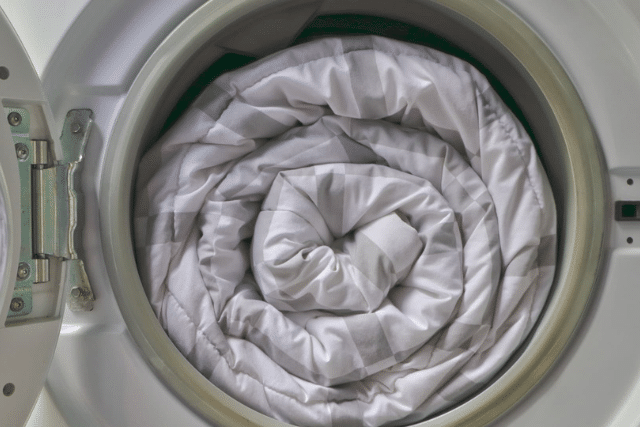
When washing bulky items like comforters or heavy towels, balance them evenly and consider using the bulky item or large load setting.
Delicate Objects
Small or delicate items should be placed in mesh bags to prevent them from entering the drain system.
Troubleshooting Specific Washer Types
Front-Loading Washer Issues
Front-loading washers often have different drainage systems than top-loaders. Common issues include:
- Door lock malfunctions
- Complex filter systems
- Horizontal drum problems affecting water flow
Top-Loading Washer Concerns
Top-loading washers typically face these unique challenges:
- Lid switch assembly failures
- Agitator or impeller problems
- Direct drive motor coupler issues in select models
High-Efficiency Models
Modern high-efficiency washers may experience:
- Sensitive electronic controls
- Advanced pump systems that require special attention
- Restricted water valve problems during both fill and drain cycles
Conclusion
When faced with a washer that won’t drain properly, don’t let feelings of ignorance or fear of complex mechanics stop you from finding a solution. With the troubleshooting steps outlined in this guide, you can often resolve drainage issues yourself and save on costly repairs. Remember that regular maintenance is your best defense against future problems. For situations that require professional expertise, A High Tech Appliance Repair offers the knowledge, tools, and commitment to quality that will get your washer back to perfect working condition. Our team is ready to provide accurate guidance and effective solutions, ensuring your laundry appliances work efficiently for years to come. Don’t let a drainage issue leave you with wet clothes and frustration – take action today to restore your washer’s proper function.